


Flat Roof Replacement: How Long It Really Lasts in Florida’s Climate
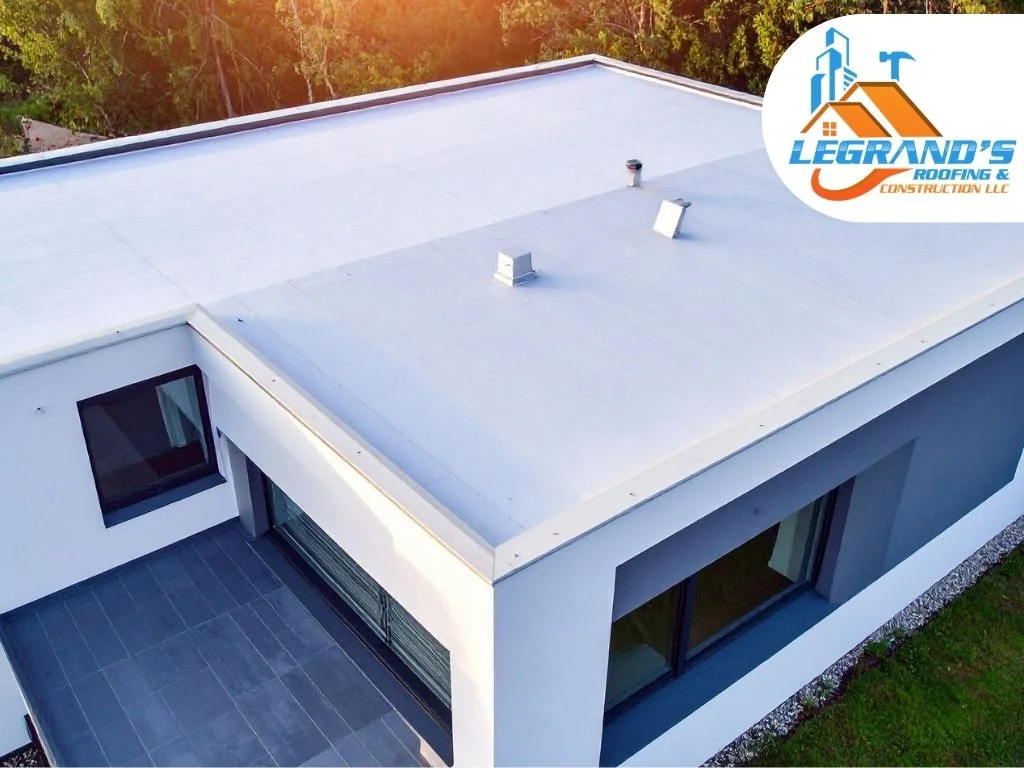
Most flat roofs in Southwest Florida last 15 to 25 years, which is typically shorter than the national ranges published by manufacturers. Material choice, installation quality, and drainage decide where in that range your roof lands. A roof that reaches 25 to 30 years in Ohio often reaches 15 to 20 years in Naples or Fort Myers, and climate explains the gap.
Here is what each system realistically gives you in our region, how to read the early signs that a roof is aging, and how Florida law shapes the repair-or-replace decision.
| Flat Roof Material | Typical Lifespan in Southwest Florida |
|---|---|
| TPO Membrane | 15 to 25 years |
| PVC Membrane | 20 to 30 years |
| EPDM Rubber | 15 to 30 years |
| Modified Bitumen | 15 to 20 years |
| Built-Up Roof (BUR) | 20 to 30 years |
| Silicone or Acrylic Coatings | 10 to 20 years |
These ranges reflect what our crews see on roofs across Southwest Florida. They run shorter than national manufacturer estimates because our climate takes a heavier toll on roofing materials than almost anywhere else in the country.
With the right material, careful installation, and steady maintenance, a flat roof here can reach the top end of its range. That is the outcome Legrand’s Roofing & Construction builds toward on every low-slope project, and it is what Excellence at Every Level means in practice.
How Long Does a Flat Roof Last in Southwest Florida?
Flat roofs behave differently from pitched tile, metal, and shingle systems. A pitched roof sheds water using gravity and overlapping materials. A flat roof relies on a fully sealed, waterproof membrane and a designated drainage path, so the membrane and drainage system carry the entire load.
That difference explains the lifespan gap. Among the pitched systems we cover on our roof replacement page, concrete and clay tile last 40 to 50 years in Florida’s climate, and metal often runs past 50. Flat roofs operate on a shorter cycle, and knowing that cycle helps you plan the expense as a budgeted investment.
Why Southwest Florida Shortens These Timelines
Five local conditions impact your flat roof year-round, each accelerating the aging process:
- Extreme UV radiation. Naples summer UV readings reach 11 on the index, falling into the extreme category. Sustained radiation at that level draws the oils out of asphalt-based systems and stiffens thinner single-ply membranes over time.
- Thermal cycling. The Environmental and Energy Study Institute notes that conventional roofs run 50 to 90 degrees hotter than the surrounding air, which puts a dark membrane well past 150°F on a Naples summer afternoon.

An afternoon thunderstorm cools that surface quickly, and the resulting rapid expansion and contraction stresses seams and flashings. Reflective white membranes stay about 50°F cooler than dark ones, so they cycle less as a result.
- Ponding water. Flat roofs are more accurately called low-slope roofs, since they carry a slight pitch that guides water toward drains and scuppers. Water still sitting on the surface 48 hours after a rainfall signals a drainage problem, because lingering water deteriorates seams faster than anything else.
- Salt air. Along the coast in Naples, Marco Island, and Sanibel, wind-carried salt spray corrodes metal fasteners and edge flashings faster than it does inland.
- Hurricane-force wind. Wind uplift concentrates its force at the roof edge, so edge securement decides how well a flat roof holds up during a named storm.
Which Flat Roof Material Lasts the Longest in Florida?
Matching the material to the building gives you the most life for your money. Here is how the common systems compare in our climate:
| Material | Florida Lifespan | Upfront Cost | UV Reflectivity | Best Suited For |
|---|---|---|---|---|
| TPO (Thermoplastic Polyolefin) | 15 to 25 years | Moderate | Excellent | Commercial and modern residential |
| PVC (Polyvinyl Chloride) | 20 to 30 years | Premium | Excellent | Restaurants, luxury homes, high-chemical exposure |
| EPDM Rubber | 15 to 30 years | Moderate | Low unless coated | Shaded or low-exposure roof areas |
| Modified Bitumen | 15 to 20 years | Budget-friendly | Low unless coated | Small residential flat additions |
| Built-Up Roof (BUR) | 20 to 30 years | Premium | Moderate with gravel | Heavy-duty commercial buildings |
| Silicone or Acrylic Coatings | 10 to 20 years | Low | Excellent | Extending the life of a stable existing roof |
Same field-experience basis as the table above. Cost levels are also relative to each other.

Most flat roof projects in Southwest Florida come down to a choice among four systems. Here’s how each one behaves in practice.
TPO (Thermoplastic Polyolefin)
TPO is the common choice for modern flat roofs in our area. Its white surface reflects solar energy, and the Cool Roof Rating Council puts average cool roof savings at 7% to 15% of total cooling costs. The Environmental Protection Agency reports that reflective surfaces stay 50 to 60° F cooler than conventional materials during peak summer weather, which produces that energy saving.
We look at this in more depth in our guide to reflective roofing systems in Southwest Florida. TPO seams are heat-welded, fusing the membrane to itself to create a stronger joint than tape or adhesive. Thickness matters here, and we recommend a minimum of 60 mils for Florida sun exposure.
PVC (Polyvinyl Chloride)
PVC is the premium option. It carries the same reflective benefits as TPO and adds stronger resistance to chemicals, grease, and punctures. PVC also stays flexible across a long service life, helping it handle repeated thermal cycling.
Modified Bitumen
Modified bitumen is a traditional multi-ply asphalt system with excellent puncture resistance. Its darker surface absorbs a great deal of heat, so adding a reflective cool-roof coating makes a meaningful difference to how it ages under the Florida sun. That coating is worth building into your plan from the start on any modified bitumen or BUR installation.
EPDM Rubber
EPDM performs well over a long service life, and its black surface absorbs heat the way modified bitumen does. A reflective coating brings it in line with white membranes on energy performance.
When the Membrane Choice Gets Made
For new builds, the membrane is chosen alongside the deck design and drainage plan, which is why our flat roof installation work starts at the framing stage with the builder. For existing buildings, planning the work for the cooler months puts a new reflective membrane in place ahead of peak summer heat, giving the system an easier first season.
How to Extend the Life of a Flat Roof in Florida
A flat roof is a managed drainage system, so its lifespan directly depends on maintenance. Roofs with cleared drains and twice-yearly seam inspections consistently outlast identical roofs on a looser schedule.
Early Signs Your Flat Roof Needs Attention
Catching these issues early usually keeps the fix in repair territory:
- Seam separation. Seams provide the waterproofing on any flat roof. Membrane edges that curl or lift give water a direct path underneath.
- Blistering or bubbling. Moisture trapped beneath the membrane vaporizes as the sun heats the roof, and the expanding vapor stretches the material.
- Ponding water. Water sitting on the surface longer than 48 hours after a rainfall points to a drainage issue that tapered insulation, added drains, or crickets can usually solve.
- Saturated insulation. Polyiso insulation boards absorb water once the membrane is breached. Saturated boards lose their R-value, which raises cooling costs and can lead to ceiling sag.
- Interior water stains. Yellow or brown ceiling stains indicate that water has moved past both the membrane and the roof deck.
Storm season is another critical time to check. A quick inspection after a named storm can catch wind-lifted edges and small punctures early. Our storm damage repair team handles both the assessment and the insurance claim documentation together.
A Seasonal Maintenance Checklist
To keep your flat roof performing beautifully for 20 years or more, we recommend implementing a proactive maintenance plan.
- Clear the drains and scuppers. Remove leaves, branches, and dirt from every drainage point at least twice a year. Clogged drains cause more ponding than any other single factor.
- Trim overhanging trees. Keeping limbs about 6 feet clear of the roof surface reduces physical punctures and minimizes debris.
- Limit foot traffic. Route authorized technicians onto designated walkway pads to keep concentrated weight off the membrane.
- Apply reflective coatings. On an older modified bitumen, EPDM, or BUR system in sound condition, a high-solids silicone coating adds waterproof protection and improves reflectivity. Manufacturer warranties on these systems commonly run 10 to 20 years depending on the product and application thickness.
- Schedule professional inspections. Two inspections a year work best in our climate: one in the fall and one in the spring. We cover when to book the pre-storm inspection separately, and commercial owners can put the whole schedule on autopilot with a proactive maintenance plan.
Repair or Replace: How to Decide
Both paths are legitimate, and the right answer depends on the condition of the membrane, the state of the insulation, and the age of the system. We will always let you know when a repair makes more financial sense.
A repair usually makes sense when:
- The damage is localized to a small area.
- The membrane is still flexible with service life remaining.
- The insulation underneath is completely dry.
A replacement usually makes sense when:
- The membrane has failed across multiple areas of the roof.
- The insulation boards are saturated.
- The roof is past 20 years old, and the seams are failing system-wide.
What Florida Law Says About the 25% Rule
Florida homeowners have more room to repair roofs than they had a few years ago, which is worth understanding because it can save you from a full replacement.
The Florida Building Code once required that any roof with 25% or more of its area repaired, replaced, or recovered in 12 months had to be brought fully up to current code, which usually meant a complete replacement. Senate Bill 4-D changed that on May 26, 2022.
Under Florida Statute 553.844(5), if your roofing system was built, repaired, or replaced in compliance with the 2007 Florida Building Code or any later edition, only the portion being repaired, replaced, or recovered has to meet the current code. The statute also bars local governments from passing ordinances that override this exception.
In practical terms, most roofs permitted from March 1, 2009, forward qualify. A roof that takes damage across a third of its surface can often be repaired in that section alone, which keeps a workable roof in service and keeps the cost proportional to the damage.
What Florida Law Says About Roof Age and Insurance
Insurance carriers pay close attention to roof age, and Florida Statute 627.7011(5) gives you specific protections worth knowing:
- An insurer may not refuse to issue or renew a homeowners policy solely because of roof age if the roof is less than 15 years old.
- For a roof 15 years or older, the insurer must allow you to obtain an inspection by an authorized inspector, at your expense, before requiring replacement as a condition of coverage.
- If that inspection shows the roof has 5 or more years of useful life remaining, the insurer may not refuse to issue or renew solely because of the roof’s age.
House Bill 1611, effective July 2024, added licensed roofing contractors to the list of authorized inspectors under that statute. A carrier letter citing roof age is an invitation to document its actual condition, and our roof inspection reports are built for exactly that purpose. A wind mitigation inspection is a separate document that can lower your premium on its own merits, and the two are often worth running together.
Take the Next Step Today!
The honest answer to how long a flat roof lasts in Florida is that the material sets the baseline, and environmental factors and maintenance dictate the final number. Good drainage, twice-yearly inspections, a reflective surface, and quick attention to seam issues all help push a roof toward the top of its expected lifespan.
Legrand’s Roofing & Construction serves homeowners, custom builders, and property owners throughout Southwest Florida, and you can check your address against our coverage areas.
Whether you need a targeted flat roof repair, a full flat roof replacement, or a straightforward assessment of how much life your roof has left, book a free inspection and our family-owned team will give you the documentation to make the right call.
Roofs that stand strong against time. Excellence at Every Level.


