


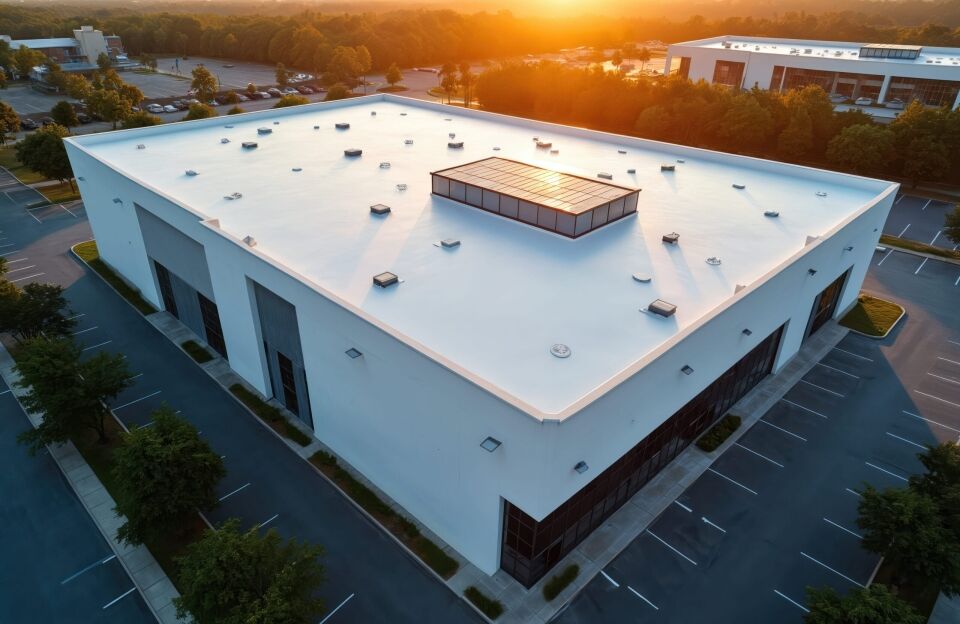
Flat Roof Installation for New Construction in Southwest Florida
High-Performance Roof Systems Designed for SWFL Climate
Legrand's Roofing & Construction installs flat roof systems on new construction across Collier, Lee, Charlotte, and Sarasota Counties, working directly with builders and architects from structural deck through final inspection. TPO, PVC, EPDM, modified bitumen, and built-up assemblies are specified to Florida Product Approval and the wind speeds this region requires, with slope and drainage designed into the build rather than corrected after.

Why Flat Roofs Excel in New Construction Projects?
New construction flat roofs offer durability, energy efficiency, hurricane resistance, and solar readiness across Southwest Florida. Proper slope and drainage prevent water pooling, while reflective materials and thicker membranes deliver lasting performance and easier maintenance access.
Modern Aesthetic
Flat roofs complement the contemporary and coastal modern architecture that defines Naples, Marco Island, and Fort Myers. Unlike pitched roofs or sloped roofs, a flat profile delivers a clean, minimalist look and additional usable space.
Energy Efficiency
Reflective flat roofing materials can reduce cooling costs in hot climates like ours. PVC roofing is highly reflective, improving energy efficiency, and TPO roofing is energy-efficient and UV-resistant - both directly lowering indoor temperatures and cooling costs.
Cost-Effective Construction
Flat roof installation on new builds avoids the expense of removing an old roof or correcting structural damage from a failing existing roof. Replacing a flat roof means a complete tear-off; new construction skips that step, which lowers cost per square foot.
Solar-Ready Design
Flat roofs are ideal for solar panels and rooftop gardens. Panels mount flush with less structural complexity, and planning penetrations during construction prevents leaks that plague retrofit installations.
Superior Hurricane Resistance
When installed correctly to the Florida Building Code, flat roof systems offer a lower profile that reduces wind uplift exposure. Thicker membranes add wind resistance and longevity — a real advantage where Collier County requires a 170 mph ultimate design wind speed.
New construction also lets our team build proper slope and drainage into the roof structure from the start. A correctly sloped flat roof prevents ponding water and standing water, the most common flat roof problems that shorten a roof's lifespan.
Our New Construction Flat Roof Services
Why Choose Legrand's Roofing & Construction?
Code-Compliant, Hurricane-Ready Systems
Every assembly carries Florida Product Approval labeling verified against the design wind speed for your specific site, with fastener patterns and edge metal specified to the uplift resistance the Florida Building Code requires. We coordinate framing, dry-in, and final inspections with the building department, then turn over the approval documentation at closeout for your building records and any future storm claim.
Energy-Efficient Reflective Materials
Highly reflective PVC and TPO membranes push solar radiation off the assembly instead of loading it into the deck, and above-deck polyiso keeps the deck above dew point so condensation doesn't form underneath. Cooler membranes also degrade more slowly under Florida UV, so the choice shows up on both the utility bill and the roof's lifespan.
Coordinated With Your Build Schedule
Retrofit crews inherit whatever slope the framer left them. We're involved from structural deck forward, so drainage, mechanical curbs, and penetration layout are designed into the build rather than worked around after, and framing inspection doesn't slip because the roofing trade showed up unprepared.
Our New Construction Flat Roof Installation Process
01
Pre-Construction Planning and Design
Legrand's Roofing & Construction collaborates with your builder and architect to establish structural requirements, drainage design, and flat roof material selection. We confirm uplift resistance testing and Florida Product Approval labeling for all roofing materials at the wind speeds required in Collier, Lee, Charlotte, and Sarasota Counties. Flat roof installation in Florida requires compliance with the Florida Building Code, and we handle permit applications through documentation.
02
Structural Deck Preparation
The structural deck is typically made of plywood or OSB (oriented strand board), and it must carry dead loads, live loads, and hurricane wind uplift forces. Our team installs the roof deck substrate sized for Florida wind loads, creates a precise proper slope with a minimum slope of 1/4 inch per foot for drainage, and coordinates with the framing inspection schedule. No flat roof is perfectly flat - that slight slope is what prevents ponding water and structural damage.
03
Insulation & Vapor Barrier Installation
Installing insulation improves energy efficiency in flat roofs. Insulation layers include polyisocyanurate, XPS, and EPS, selected for your project's thermal requirements and Florida energy code compliance. Placing insulation above the deck creates a warm roof assembly, which keeps the deck above dew point. Our team installs the insulation layer and moisture barrier, with proper ventilation detailing to stop condensation beneath the roofing membrane.
04
Membrane Installation and Sealing
A waterproofing membrane prevents water infiltration in flat roofs. Our team applies the selected membrane using manufacturer-approved methods: heat-welded seams for TPO and PVC roofing systems, adhesive or self-adhering systems for EPDM, or torch/cold adhesive for modified bitumen. Precision installation around roof penetrations (HVAC curbs, vents, skylights) and parapet walls leaves no weak points where seams separate or blistering develops.
05
Flashing and Drainage Integration
Flashing seals joints and edges on flat roofs. Legrand's Roofing & Construction installs metal flashing around all roof edges, penetrations, and parapet walls using corrosion-resistant materials rated for coastal exposure. Flashing installation must comply with local building codes to prevent leaks. Effective drainage systems include scuppers, internal drains, interior drains tied to plumbing, and gutters — all sized to the design rainfall rate the Florida Building Code sets for this region.
06
Final Inspection and Quality Assurance
Inspection and testing are mandatory to confirm the structural integrity of the roof. Our team conducts a comprehensive roof inspection of all seams, flashings, and drainage components before coordinating the building department's final inspection. We provide documentation for warranty coverage, building records, and future storm insurance claims, plus a flat roof maintenance schedule.
Top 5 Flat Roof Systems for Southwest Florida New Construction
Choosing the right flat roof material determines how your roof performs for decades. Here are the five systems our team installs for new construction in SWFL:
TPO (Thermoplastic Polyolefin)
Thermoplastic Polyolefin is a popular roofing material in hot climates. TPO delivers superior heat reflection, heat-welded seams for watertight performance, and strong UV resistance - making it the most common choice for energy-efficient flat roofs in Southwest Florida. Typical lifespan: 15–25 years.
EPDM Rubber Membrane
EPDM roofing is lightweight and flexible for easy installation, including self-adhering systems. This rubber membrane stays pliable in cold temperatures and is forgiving on substrates that shift. Available in reflective white to offset heat absorption in Florida's intense sun. Lifespan: 15–25 years.
PVC Single-Ply
PVC roofing provides excellent waterproofing with the highest chemical resistance of any single-ply membrane. Its highly reflective surface significantly reduces cooling costs, and its strong seam welds stand up to coastal salt air exposure. Lifespan: 20–25+ years.
Built-Up Roofing (BUR)
Built-Up Roofing consists of layers of bitumen and fabric, creating redundant waterproofing protection. This traditional system delivers maximum hurricane protection for larger roofs and commercial properties requiring heavy-duty performance. Lifespan: 20–30 years.
Modified Bitumen
Modified bitumen offers flexibility and durability for foot traffic, making it ideal for commercial applications where rooftop access is routine. Multi-layer protection provides excellent puncture resistance. Lifespan: 15–20 years.
Every flat roof material here must withstand high temperatures and UV radiation. Corrosion-resistant materials are needed in coastal environments, and flat roof maintenance requirements differ by system — something we cover before you choose.
Explore more about different types of roofing to compare options for your project.
What Our Clients Say
Don't just take our word for it. See why homeowners across Southwest Florida trust Legrand’s Roofing.
Expert Roofing Services Across Southwest Florida
From our headquarters in Naples, Legrand’s Roofing & Construction LLC delivers excellence at every level
to homeowners and luxury builders throughout the quad-county area.