

How Wind Mitigation Inspections Can Help Lower Your Florida Insurance Costs
Wind Mitigation Inspection in Naples, FL: What It Checks, What It Costs, and How Much You Can Save?
If you own a home in Naples or Southwest Florida, you already know the worry that comes with hurricane season: rising premiums, roof damage risks, aging materials, and the fear that one overlooked weakness could cost far more later.
A wind mitigation inspection is the starting point because it documents the wind-resistant features your insurer needs to review before deciding whether your home qualifies for valuable discounts.
At Legrand’s Roofing & Construction LLC, we can help you understand what your roof is saying before storm season turns small concerns into expensive problems. While the inspection itself documents features like roof shape, roof deck attachment, roof-to-wall connections, secondary water resistance, and opening protection, our team can help you prepare, repair, or replace roofing components so your home is stronger, safer, and ready for the best possible review.
What is a wind mitigation inspection?
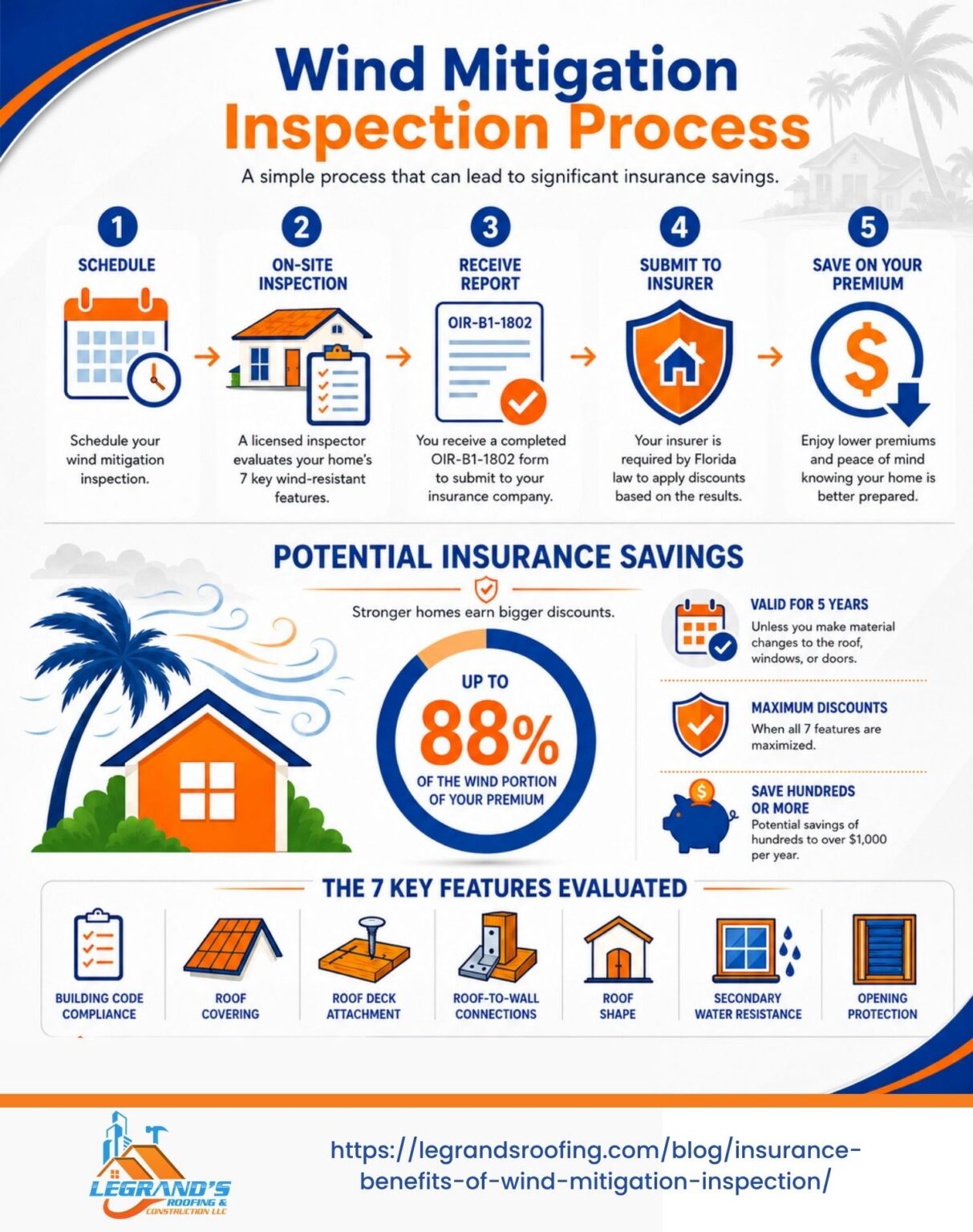
- A licensed inspector evaluates how well your home resists hurricane-force winds
- They check seven key features: building code compliance, roof covering, roof deck attachment, roof-to-wall connections, roof shape, secondary water resistance, and opening protection
- You receive a completed OIR-B1-1802 form to submit to your insurance company
- Your insurer is required by Florida law to apply discounts based on the results
- The inspection is valid for five years (unless you make material changes to the roof, windows, or doors)
- Total discounts can reach up to 88% of the wind portion of your premium when all features are maximized
If you’re in Southwest Florida and looking for a certified inspector or a roofing contractor who understands what it takes to pass this inspection with the strongest possible results, you’re in the right place.
Florida’s hurricane season runs from June 1 through November 30. But the decisions that protect your home and your wallet happen before the storms arrive. Getting a mitigation inspection is one of the smartest first steps you can take.
What Should Florida Homeowners Know About Wind Mitigation Inspections vs. 4-Point Inspections?
Many Southwest Florida homeowners get confused when their insurance agent asks for inspections. They often ask us: “Do I need a 4-point inspection or a wind mitigation inspection?
The answer depends on whether your insurance carrier is evaluating your home’s basic insurability or looking to apply discounts. Under Florida Statute 627.0629, insurance companies are required by law to offer premium discounts for homes with verified wind-mitigation features.
To help you understand the core differences, we have broken down how these two common insurance inspections compare:
| Feature | 4-Point Inspection | Wind Mitigation Inspection |
|---|---|---|
| Primary Purpose | Determines basic insurability and risk assessment. | Verifies storm-resistant features to qualify for discounts. |
| What It Checks | Four core systems: HVAC, Electrical, Plumbing, and Roof. | Seven specific wind-resistance features of the roof and openings. |
| Required For | Typically required for homes over 10–25 years old. | Strictly voluntary, but highly recommended for premium savings. |
| Impact on Premium | Determines if you get coverage; does not guarantee discounts. | Directly lowers the windstorm portion of your premium (up to 88%). |
While a 4-point inspection looks at the age and condition of your systems to ensure they won’t fail under normal conditions, a wind mitigation inspection focuses on structural resilience to severe storms. If you want to dive deeper into how these reports function, you can read the Wind Mitigation Inspection Guide: What It Checks, How Discounts Work, and When It Pays Off.
For homeowners in Naples, Marco Island, and Bonita Springs, scheduling these evaluations before storm season is critical. You can learn more about timing these assessments in our guide on the Best Time for Pre-Storm Pre-Hurricane Roof Inspections Southwest Florida.
What Key Wind Mitigation Features Can Help Florida Homeowners Save Money?
When an inspector walks onto your property, they are checking very specific construction details. Each of these details corresponds to a section on the official state form, and each carries a different discount weight.
Let’s look at the major features checked during an inspection and how they affect your bottom line:
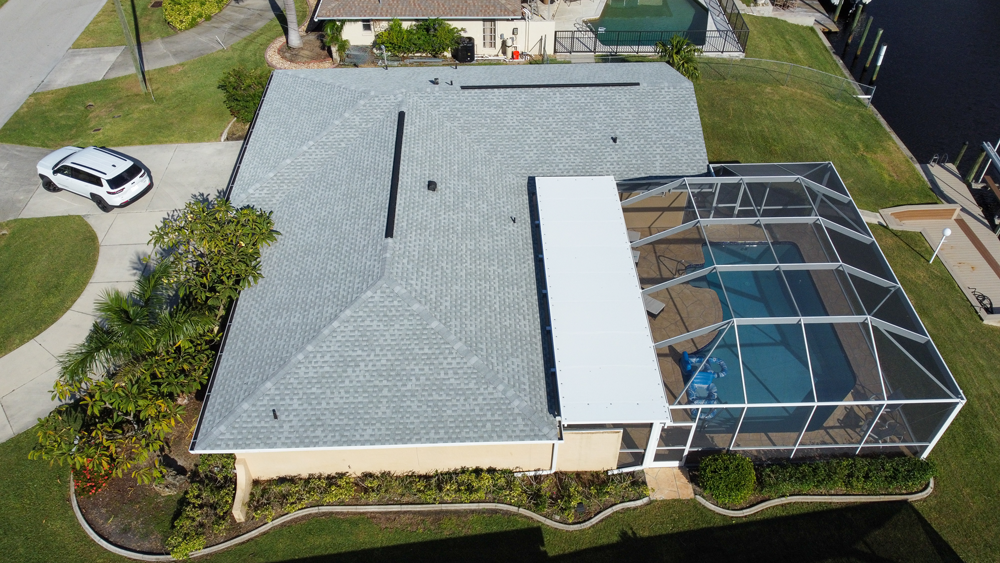
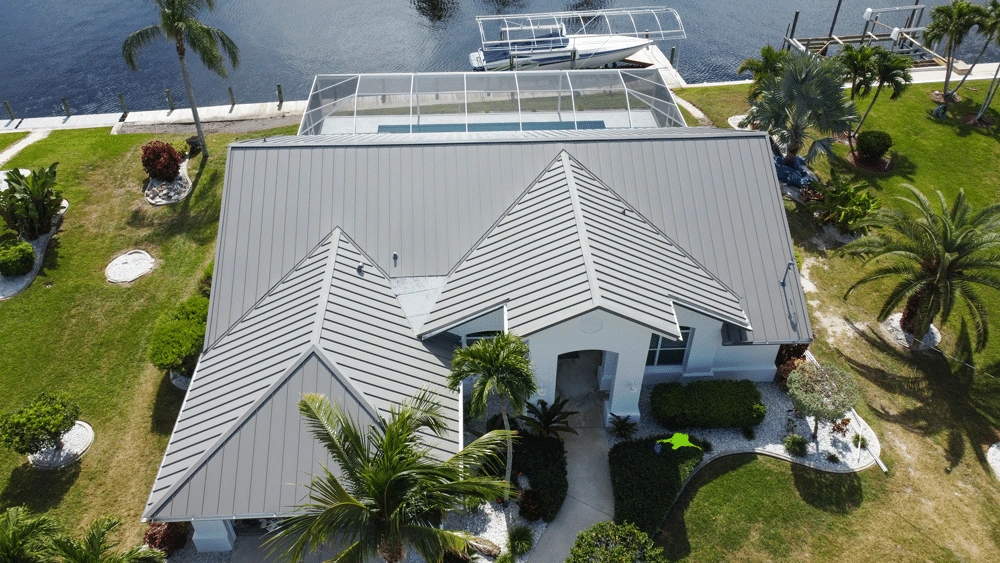
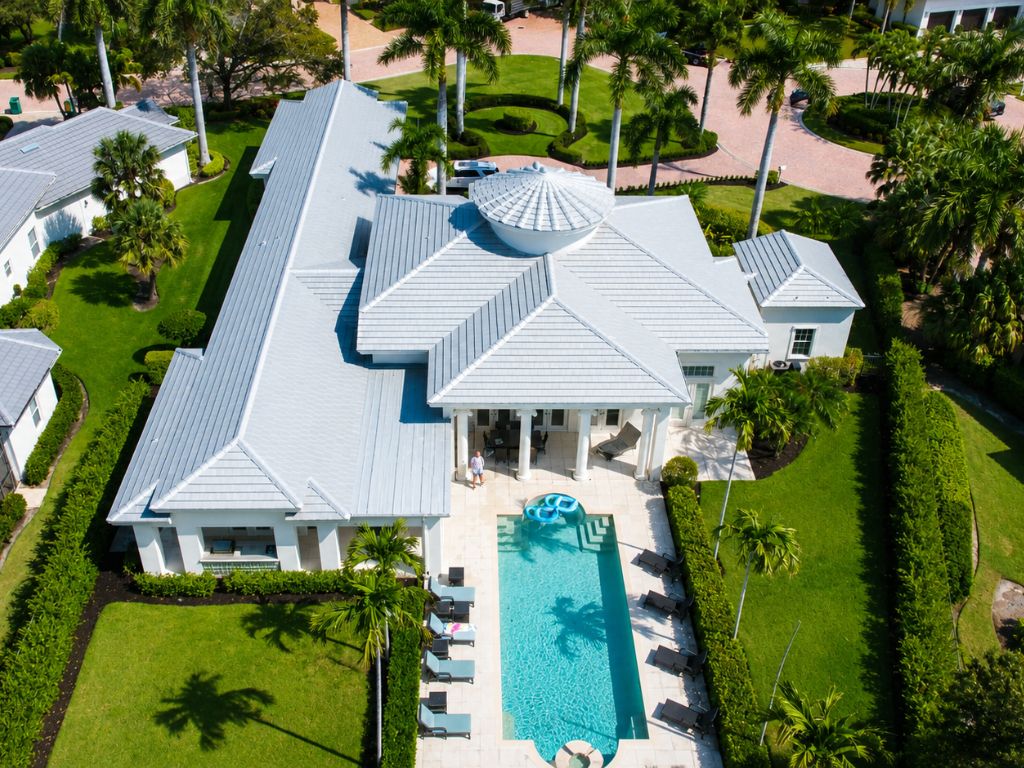
- Roof Geometry (Shape): The shape of your roof plays a massive role in how wind flows over your home. Hip roofs (which slope down on all four sides like a pyramid) receive a 32% wind premium discount because they are naturally aerodynamic and distribute wind pressure evenly. Gable roofs (two sloping sides that meet at a ridge, with a flat triangular wall at each end) are more prone to wind uplift at those end walls.
- Roof Deck Attachment: This measures how securely your roof sheathing (the plywood under your shingles or metal) is nailed to the trusses. The inspector looks for 8d ring-shank nails spaced closely together (6 inches apart).
- Roof-to-Wall Connections: This determines how your roof is anchored to your home’s walls. The inspector checks for toenails, clips, single wraps, or double wraps.
- Secondary Water Resistance (SWR): This is a sealed roof deck barrier (like a self-adhering polymer modified-bitumen membrane) installed directly onto the sheathing.
- Opening Protection: This is the single largest discount category, worth 30% to 45% of your wind premium. To qualify, every single opening (windows, exterior doors, and garage doors) must be protected by impact-rated glass or wind-borne debris shutters.
If you are considering upgrading your roof to maximize these structural discounts, you might also want to read about how to Storm Proof Your Home with Metal Roofing.
What Does the Inspector Check on Your Roof and Openings?
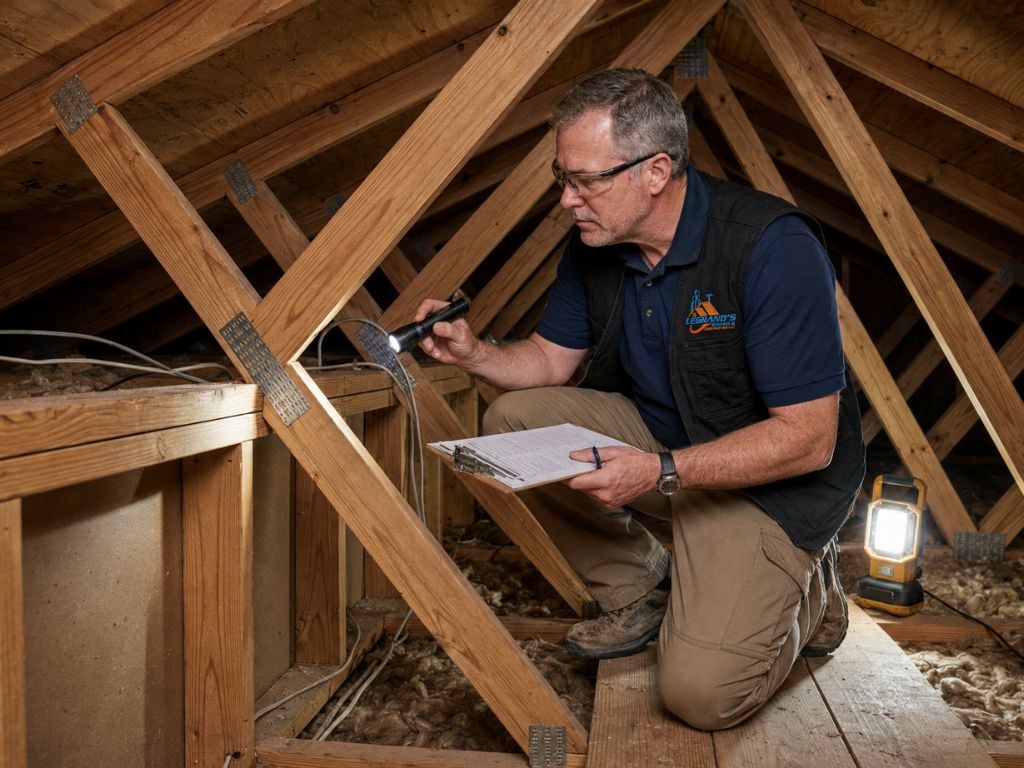
To verify these features, the inspector must physically examine your home. This means they will need attic access to look at your roof trusses, sheathing, and nail spacing.
During the attic crawl, the inspector will measure the length and spacing of the nails holding your roof deck down. They will also look at the metal connectors joining your roof to your walls. They want to see if your home uses “clips” or “wraps” rather than simple “toe nails.”
For openings, the inspector will look for stamps or labels on your windows, glass doors, and garage doors to verify their impact ratings. If you use shutters, they will verify that you have complete coverage for all glazed openings. You can view the structure of the official checklist in this Uniform Mitigation Verification Inspection Form 1802.
If your roof or structural connections need retrofitting to meet these high standards, we can help you prepare with a Hurricane Ready Roof Repair Southwest Florida.
What Changed with the 2026 OIR-B1-1802 Form Update?
The Florida Office of Insurance Regulation periodically updates the official form to reflect modern engineering standards and lessons learned from recent hurricanes. The 2026 update to the OIR-B1-1802 form introduced several critical changes that Southwest Florida homeowners should be aware of:
- Stricter Photo Documentation: Inspectors must now provide high-resolution, clear photos for almost every single category, including close-ups of nail heads in the attic and specific connector types.
- Individual Opening Assessments: Instead of a generalized check, the new form requires a detailed, individual assessment of every window, door, and skylight to ensure there are no weak links in your opening protection.
- Enhanced Verification Standards: The form requires clearer proof of permit dates and product approvals, making it harder to claim discounts without official documentation.
If you are planning a reroof or major repair under these strict guidelines, review our guide on Preparing for Roof Storm Damage Repair 2026.
How Can Florida Homeowners Get a Wind Mitigation Inspection, Maximize Discounts, and Apply for Credits?
Getting your inspection scheduled is a simple process, but getting the best possible score requires some preparation. We always recommend gathering your paperwork ahead of time. If you recently had a roof replacement, find the building permits, invoices, and product approval forms. Having these ready for your certified inspector ensures you don’t lose out on credits simply because a feature wasn’t “verifiable.”
Once the inspector completes the report, they will send you the signed OIR-B1-1802 form. You should immediately forward this to your insurance agent so they can submit it to your carrier and re-rate your policy. For more context on how insurers handle these reports, read What is a Wind Mitigation Inspection?.
If you are planning to replace your roof to secure these permanent premium reductions, consider reading about Roof Replacement Naples FL Before Heat Storms Arrive.
How Much Does a Mitigation Inspection Cost and Is It Free?
A typical inspection is highly affordable, usually ranging between $75 and $150, depending on the size of your home and your location. If you bundle it with a 4-point inspection, you can often save money, with bundled packages running around $180 to $220.
Even better, you may be able to get this inspection completely free. The state-funded My Safe Florida Home program offers free inspections to eligible Florida homeowners. Additionally, the program provides $10,000 matching grants (offering $2 for every $1 you spend) to help you pay for recommended upgrades like roof-to-wall strength, secondary water barriers, and impact windows.
If you need to make minor repairs before your inspection to ensure a perfect score, consult our Naples FL Roof Repair Guide 2026.
Common Mistakes That Lower Your Score and How to Qualify for the 88% Maximum Discount
Many homeowners miss out on the maximum 88% wind premium discount because of small, easily correctable mistakes.
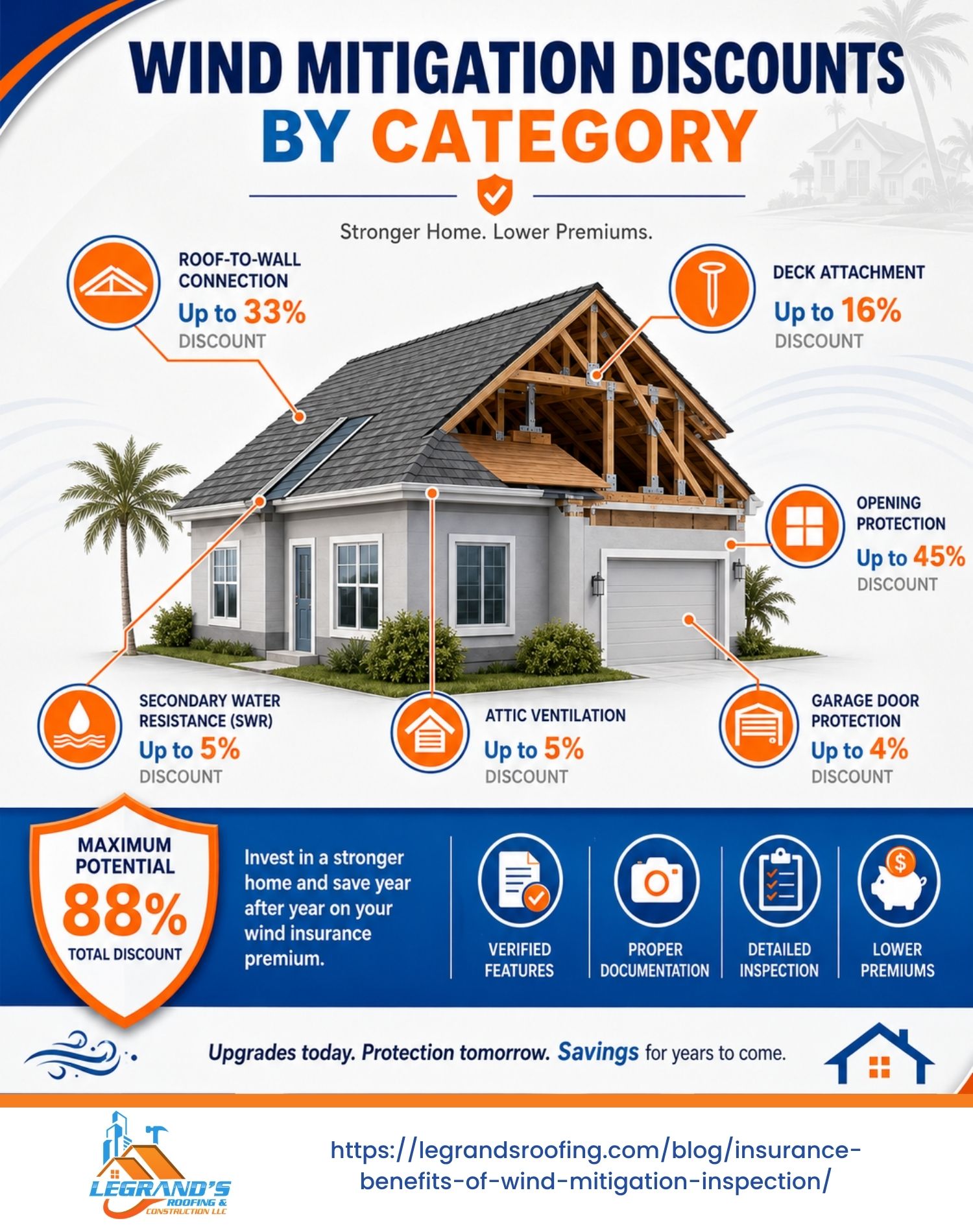
Here are the most common pitfalls we see:
- The “One Window” Mistake: To get the 30% to 45% opening protection discount, every single opening must be protected. If you have impact windows on your entire house but forgot to protect a tiny bathroom window or your garage door, you get zero credit for opening protection.
- No Attic Access: If the inspector cannot access your attic because the hatch is painted shut or blocked by shelving, they must mark your deck attachment and roof-to-wall connections as “unknown.” This means you miss out on those credits entirely.
- Unverified SWR: If you install a Secondary Water Resistance barrier during a reroof but fail to take photos or provide the contractor’s invoice proving it was installed, the inspector cannot verify it once the shingles are on top of it.
How to Apply for Your Credits and Maintain Your Inspection Validity
Applying for your wind mitigation credits is as simple as sending the completed OIR-B1-1802 form to your insurance agent. Once submitted, your insurer will apply the discounts, which often show up as a pro-rated refund check or a credit on your next renewal bill.
Remember that your mitigation inspection is valid for five years. After five years, you will need to get a new inspection to maintain your discounts. However, if you make any major structural changes before those five years are up, such as replacing your roof or upgrading to impact windows, you should order a new inspection immediately to capture your new, higher discounts.
If you searched for a wind mitigation inspection because you want to understand what inspectors look for, how Florida insurance discounts work, and what your roof may need before the report is submitted, this guide gives you the starting point. Our team’s goal is to help you feel more confident about the process, from checking the roof shape and deck attachment to understanding secondary water resistance, opening protection, and steps that can help reduce the windstorm portion of your premium.
At Legrand’s Roofing & Construction LLC, we bring local Naples roofing experience, hurricane-ready workmanship, and honest guidance to homeowners who want to protect their property before storm season. If your inspection reveals roof concerns, missing documentation, storm damage, or upgrade opportunities, our team can help you decide the next best step with confidence.
Ready to strengthen your roof and improve your chances of qualifying for valuable wind mitigation credits? Contact Legrand’s Roofing & Construction LLC today to schedule a roof evaluation, discuss your inspection concerns, or explore our Roof Storm Damage services before small issues turn into costly hurricane-season problems.